
Rollbit Hong Kong evidence dossier: licence and risk checks
Evidence signal: amber. The available records do not justify calling Rollbit either a verified Hong Kong-authorised service or a proven scam. A supplied certificate capture links rollbit.com, Bull Gaming N.V. and Curaçao record OGL/2024/1260/0494, but the accepted evidence ledger does not establish a current expiry date or confirm that the certificate remains valid at the moment a customer registers or deposits. Even a valid Curaçao certificate would be a foreign regulatory record, not permission from Hong Kong authorities.
Licence validity is the first unresolved check
The central issue is not simply whether a certificate image exists. The practical question is whether the foreign record is current, whether it covers the precise hostname being used, and whether the named entity remains responsible for customer accounts. The supplied material identifies Bull Gaming N.V. and Curaçao OGL/2024/1260/0494, yet no verified expiry date appears in the accepted ledger. That gap prevents a green signal.
An expiry date passing would not, by itself, prove fraud. A record might have been renewed, replaced, suspended or allowed to lapse, and each possibility requires current primary confirmation. Conversely, an old screenshot cannot prove continuing authority. Customers should inspect the live certificate destination, its status, covered domain and legal entity at the time of use. A mismatch in any of those fields is a reason to pause rather than assume continuity.
| Licence question | Available evidence | What remains open |
|---|---|---|
| Named entity | Bull Gaming N.V. appears in the supplied brief | Current responsibility for the account contract |
| Foreign record | Curaçao OGL/2024/1260/0494 is supplied | Current status and validity window |
| Covered hostname | rollbit.com is the specified domain | Live certificate-to-host match at transaction time |
| Hong Kong authority | None established | No local authorisation should be inferred |
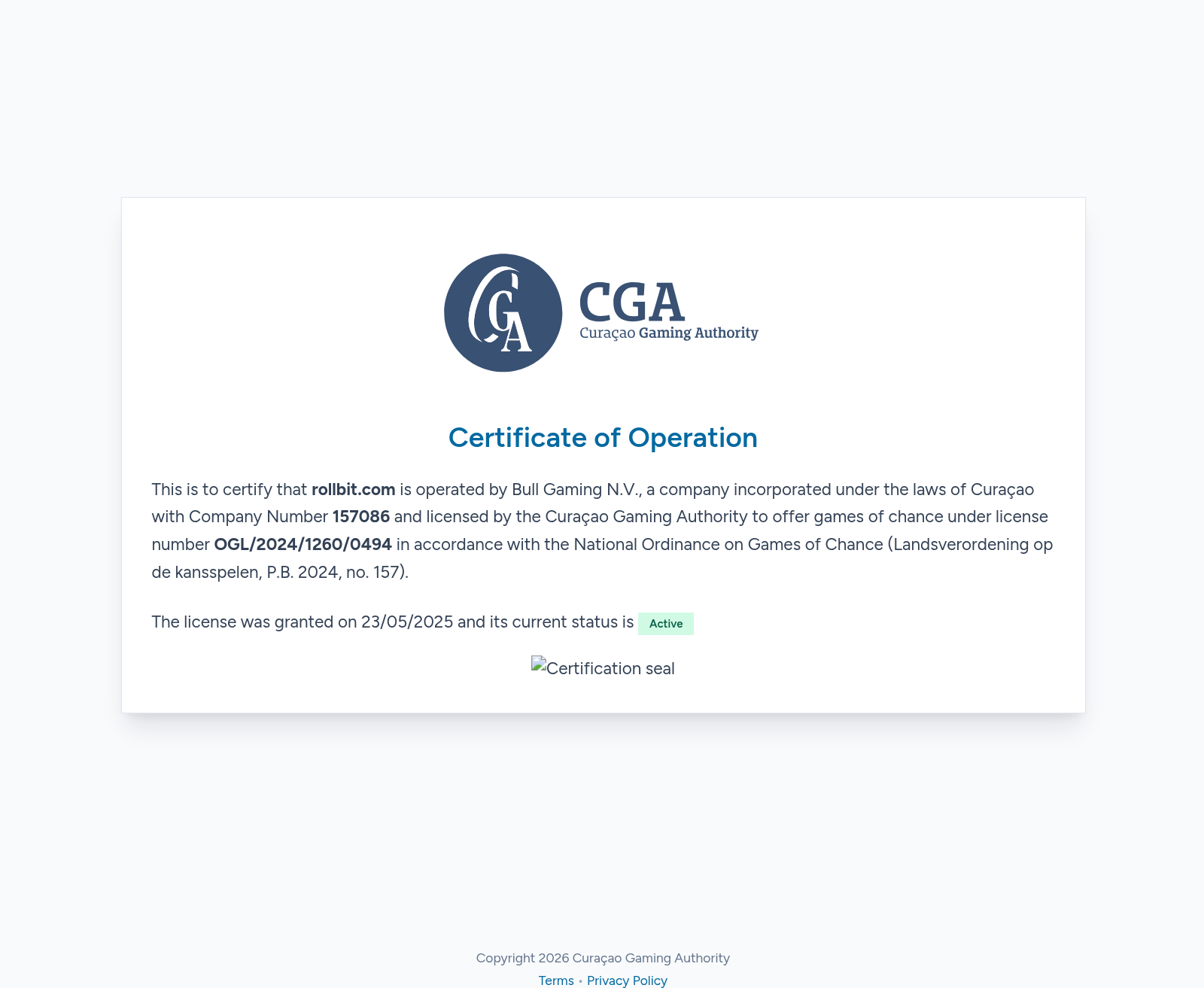
Operator, hostname and account-contract matching
A legitimate-looking brand name is not enough to identify the contracting business. The browser address should be exactly rollbit.com, with no added words, substituted letters, unusual subdomains or redirects to an unrelated host. A padlock only indicates an encrypted connection; it does not prove that the recipient is licensed, solvent or authorised in Hong Kong.
Before creating an account, compare the legal name in the terms, privacy notice, cashier and certificate. Bull Gaming N.V. should not be treated as the responsible party merely because that name appears in supplied material. If another company appears at checkout or in the account agreement, record the discrepancy and obtain an explanation before transferring value. The payment recipient shown by a bank, card network or crypto transfer may also differ from the consumer-facing name, so preserve that information.
| Checkpoint | Expected match | Warning sign |
|---|---|---|
| Browser address | Exact specified hostname | Misspelling, added term or unexplained redirect |
| Terms | Clearly named contracting entity | Missing, inconsistent or inaccessible legal name |
| Certificate | Current status and exact-domain coverage | Expired, revoked or different domain |
| Payment record | Traceable recipient and transaction reference | Unexpected recipient or request to conceal purpose |
What the Hong Kong evidence does and does not show
A current Hong Kong casino comparison explicitly includes BC.Game, Sportsbet.io, Shuffle, Rollbit and Roobet. This establishes inclusion in a third-party market comparison, not approval by a Hong Kong regulator. Listing, popularity and availability are different questions from legal authorisation.
A July 2026 Hong Kong gambling-category traffic table lists several selected exact domains. Traffic measurement can indicate audience activity, but it cannot verify licence status, fair treatment, withdrawal reliability or the location and legal status of individual users. Similarly, a Hong Kong-specific 1xBet record concerns another operator. It helps document the broader evidence environment but does not transfer any legal conclusion to this service.
Hong Kong legal status therefore remains unresolved by the supplied operator-specific records. Foreign licensing must not be presented as local authorisation. Customers should consult the dedicated licensing guide for the distinction between a foreign certificate, local permission and simple online accessibility.
Scam-or-legit verdict: why amber is appropriate
The word “legit” can refer to several separate propositions: a real operating business, a current foreign certificate, lawful access from a particular location, fair game operation, or dependable withdrawals. The packet does not establish all of them. It also contains no official adverse finding showing that the specified domain is fraudulent. A red verdict would therefore overstate the evidence, while green would imply current primary confirmation that is absent.
The independent review supplies a third-party assessment and a contextual summary of user signals. Such material may identify issues worth checking, but user allegations remain unproven unless supported by transaction records or a competent dated finding. Review language is not a substitute for the customer’s contract, regulator records or a documented payment test.
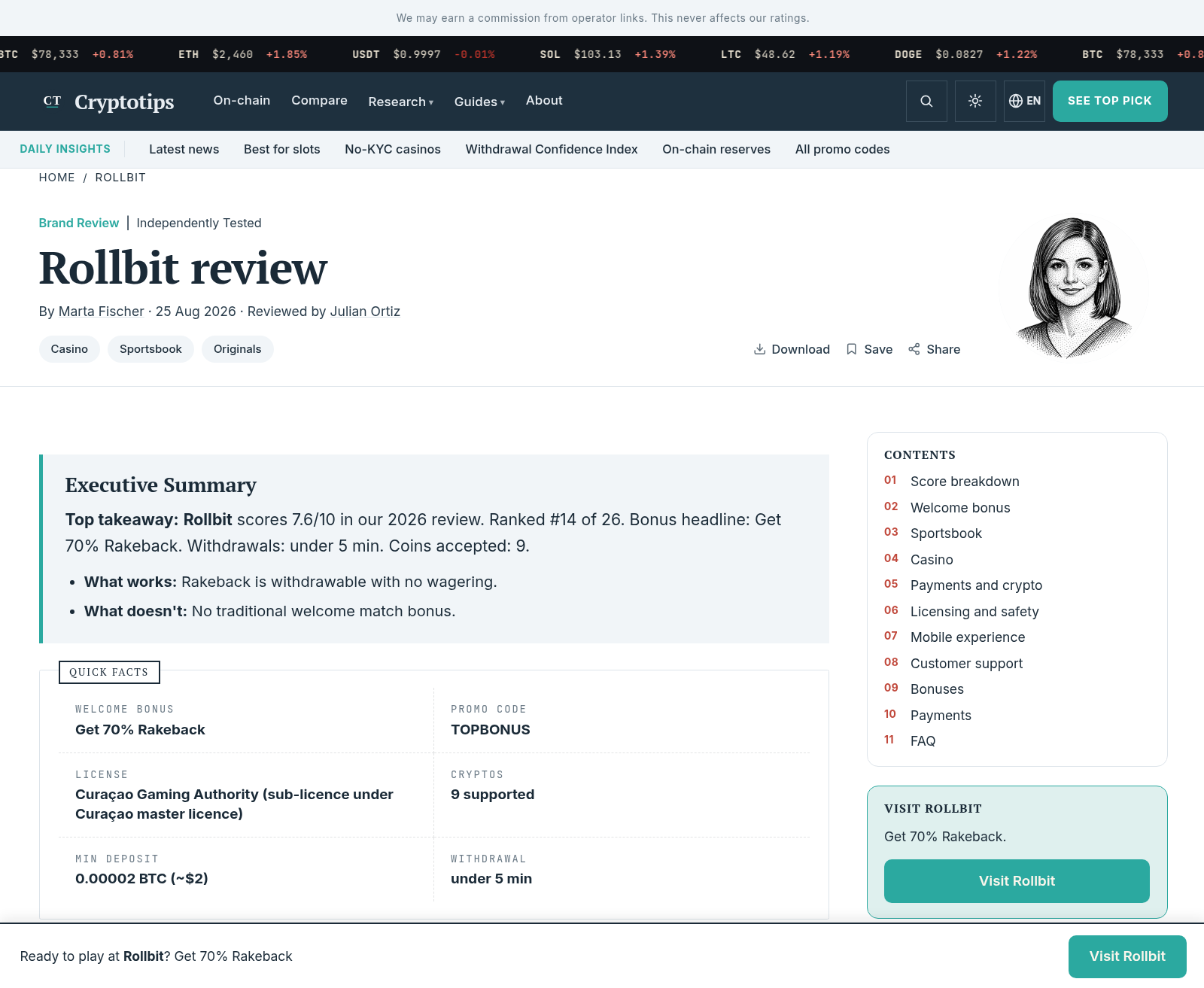
The defensible conclusion is limited: the service has visible third-party market coverage and a supplied foreign-certificate association, while current licence validity, Hong Kong authorisation and transaction performance remain open. That combination supports caution and further verification rather than a categorical accusation or endorsement.
Payments and deposits: evidence gaps matter
No verified payment-method list was supplied. It would be unsafe to claim support for cards, bank transfers, e-wallets, particular cryptocurrencies or Hong Kong dollar settlement. Cashier options can also vary by account location, currency, verification status and provider availability. Only the methods displayed inside the verified account at the time of payment should be treated as currently offered.
Before depositing, record the funding asset, network, exchange rate, service fee, minimum amount and recipient. For crypto transfers, confirm the asset and network independently; sending to an incompatible network can make recovery impossible. Do not rely on a copied address from an unsolicited message. For conventional payments, retain the merchant descriptor and any payment-processor name because these details may be needed for a complaint.
| Payment detail | Verified here? | Action before funding |
|---|---|---|
| Supported methods | No | Check the live cashier |
| Fees and exchange rate | No | Capture the quoted total |
| Deposit limits | No | Read account-specific limits |
| Recipient identity | No | Save the descriptor or wallet details |
| Processing time | No | Do not assume instant credit |
A cautious first transaction should be limited to an amount the customer can afford to lose. The sole commercial route supplied for readers who have completed these checks is Compare selected options. It is not a statement that gambling is lawful for every user or that withdrawals will succeed.
Withdrawals, KYC and account restrictions
No deposit or withdrawal test was provided, so there is no evidence-backed basis for claiming a typical payout speed. No verified minimum withdrawal, fee schedule, pending period or maximum limit is available either. Published estimates, if encountered in an account, should be treated as conditional rather than guaranteed.
KYC may involve identity, age, address, payment ownership or source-of-funds checks, but the packet does not establish the operator’s exact current requirements. Customers should read the live rules before depositing and ask whether verification can be completed in advance. Documents should be uploaded only through a verified secure channel. Requests arriving through social media, private messaging or an unfamiliar domain require additional authentication.
If a withdrawal is delayed, distinguish a stated review from an unexplained refusal. Record the request time, amount, asset, transaction status, verification requests and every response. Avoid cancelling and resubmitting repeatedly unless support explains the consequence in writing. A demand for an additional deposit, tax or unlocking payment before release deserves particular caution and independent verification.
Complaint timing and an evidence-preserving route
Start with the operator’s formal support channel shown on the verified hostname. State the account identifier, disputed transaction, relevant rule and requested resolution without including passwords or recovery phrases. Ask for a ticket number and a written response deadline. Screenshots should show the date, status and full relevant context rather than a cropped claim.
| Stage | Record to preserve | Purpose |
|---|---|---|
| Initial contact | Ticket number, message and timestamp | Shows notice to the operator |
| Verification | Document request and secure upload receipt | Shows compliance without exposing documents publicly |
| Transaction | Cashier status, ledger entry and network reference | Identifies where processing stopped |
| Escalation | Final response or missed deadline | Supports a structured complaint |
Use the complaint guide to organise the chronology. A foreign regulator or dispute channel should be approached only after confirming that it covers the exact entity and record. Hong Kong authorities, a payment provider or law enforcement may have different remits. If there is immediate financial harm, coercion or loss of account control, consult urgent help rather than continuing to transact.
Clone detection and account-security checks
Impersonation risk exists even when a genuine service can be identified. Type or use a previously verified address rather than following advertisements, direct messages or search-result copies. Confirm the hostname before login and again before payment. Password-manager recognition can provide an additional warning if credentials are being entered on a different domain.
- Reject any request for a password, one-time code, private key or wallet seed phrase.
- Do not install remote-access software at the direction of supposed support staff.
- Check whether email links lead to the exact hostname before opening an account session.
- Verify deposit addresses inside the authenticated cashier, not through chat messages.
- Use a unique password and available multi-factor authentication.
- End contact if someone promises guaranteed recovery in exchange for an advance fee.
A logo, polished interface or copied certificate image can be reproduced by an impersonator. The supplied brand icon and captures help identify the reviewed materials, but none can authenticate a live session by itself.
Evidence chronology, methodology and correction path
The contextual review and accepted market records were checked on 1 September 2026. The traffic source describes July 2026 category data. These dates matter because market listings and traffic observations can change, and neither provides perpetual proof. The certificate capture has been retained as visual evidence, but the ledger supplied for this dossier does not give a verified validity window. That is the decisive open item behind the amber signal.
The method separates primary market records, third-party context and unknowns. Inclusion or traffic evidence supports only the narrow claim stated by its source. Information concerning another operator is not used to infer this operator’s status. User reports are treated as allegations or context, not findings. See the full evidence methodology and editorial policy.
Corrections should identify the precise statement, provide a dated primary record and explain the relationship between the entity, certificate and hostname. Current proof of renewal, suspension, revocation or a changed contracting entity could alter the assessment. Submit documented corrections through contact; unsupported promotional claims or anonymous accusations are insufficient.
Frequently asked questions
Is Rollbit a scam or legitimate in Hong Kong?
The evidence does not support either a definitive scam finding or a green endorsement. A supplied foreign-certificate association and third-party market visibility exist, but current licence validity, Hong Kong authorisation and withdrawal performance remain unverified. The appropriate signal is amber.
Is Rollbit licensed in Hong Kong?
No Hong Kong authorisation is established by the supplied records. Curaçao OGL/2024/1260/0494 is described as a foreign record associated with Bull Gaming N.V.; even if current, it should not be presented as a Hong Kong licence.
Does the Curaçao record currently cover rollbit.com?
The supplied capture associates the record with the specified domain, but the accepted ledger does not confirm its current status or expiry date. Check the live certificate, named entity and exact hostname before relying on it.
Which payment methods and currencies are available?
No current payment-method or currency list was verified. Check the authenticated cashier for account-specific options, fees, limits, exchange rates and recipient details before transferring funds.
How long do withdrawals take?
No withdrawal test or verified timing schedule was supplied. Processing can depend on the method, verification and account review. Preserve the request timestamp, status, transaction reference and all support replies.
What should I do if a withdrawal is delayed?
Open a formal support ticket, request the reason and deadline in writing, and preserve the account ledger, KYC requests and transaction references. Escalate only through a channel confirmed to cover the exact legal entity and certificate.
HK Casino Top
UK Gambling Commission
Curaçao Gaming Authority